Energy label and your mortgage: extra borrowing in 2026
· 7 min read
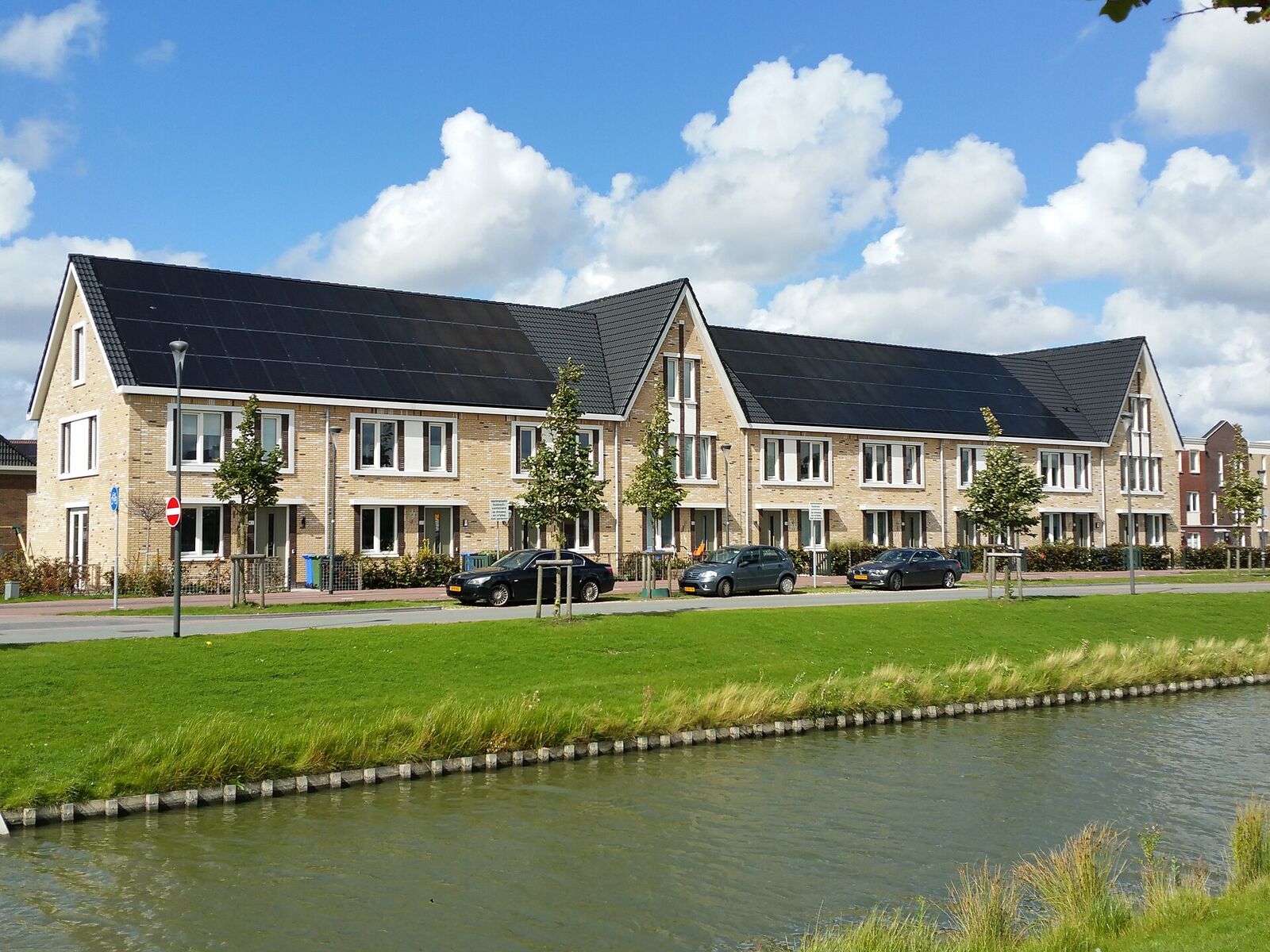
An energy-efficient home can raise the amount you are allowed to borrow. Under the Dutch lending rules for 2026, a lender may leave between €0 and €40,000 out of its affordability check, depending on the home's energy label. If you borrow to make an existing home more efficient, it may leave out up to €20,000 more. Money for energy-saving measures can also take your loan above the usual limit of 100% of the home's value, up to 106%. The label comes from the national register, EP-Online. The valuer includes it in the valuation report.
These rules are in the Tijdelijke regeling hypothecair krediet (the regulation on mortgage lending), which the government updates every year.
Extra borrowing space by energy label
When a lender works out your maximum mortgage, it checks whether you can afford the monthly payments on your income. For an energy-efficient home, the rules let the lender leave part of the loan out of that check. In effect, you can borrow that much more than your income alone would allow.
| Energy label of the home | Amount the lender may leave out, 2026 |
|---|---|
| E, F, G | €0 |
| C, D | €5,000 |
| A, B | €10,000 |
| A+, A++ | €20,000 |
| A+++ | €25,000 |
| A++++ | €30,000 |
| A++++ with an energy performance guarantee for at least 10 years | €40,000 |
The idea is that a lower energy bill leaves you more room for the mortgage. For 2026 the government lowered the amounts for the most efficient homes: A+++ went from €30,000 to €25,000. Its reasoning is that in these homes the energy bill can't come down much further, mostly just through more solar panels, and those now earn less than they used to.
Extra for energy-saving measures
If you take out the mortgage partly to make the home more efficient, the lender may leave a further amount out of the affordability check. This depends on the label of the existing home, so the least efficient homes get the most room:
| Label of the existing home | Extra the lender may leave out for measures, 2026 |
|---|---|
| E, F, G | €20,000 |
| C, D | €15,000 |
| A, B | €10,000 |
| A+, A++ | €10,000 |
| A+++, A++++ | €0 |
| No valid label | €10,000 |
The €10,000 that A+++ homes used to get for measures was dropped for 2026.
The rules define energy-saving measures as: insulation of the façade, roof, floor or pipes; high-efficiency glass (at least HR++); energy-efficient doors; new frames, if fitted with HR++ glass or better; shower heat recovery; an energy-efficient ventilation system, if combined with other measures; heat pumps; and solar panels.
The value limit: 106% for measures
Separately from income, a Dutch mortgage can't normally be more than 100% of the home's value. For energy-saving measures the rules allow up to 106%, and the extra may only be spent on those measures.
A hypothetical example. Say the valuer puts a label-D house at €400,000, and you plan €20,000 of roof insulation and a heat pump.
- Value limit. Normally you could borrow at most €400,000. With the measures you could borrow up to €420,000, which is within the 106% cap of €424,000.
- Income limit. Say your income on its own supports €390,000 for this home. The lender may leave out €5,000 for the label D and up to €15,000 for the measures, so up to €410,000 could pass the affordability check.
- Result. You could borrow up to the lower of the two limits: €410,000.
These are things a lender may do. It is not obliged to use them. An adviser can tell you how different lenders apply them to your case.
With NHG
If you use NHG, the loan limit in 2026 is €470,000, or €498,200 when the part above €470,000 pays for energy-saving measures. NHG requires money borrowed for improvements to be held in a construction deposit (bouwdepot) and paid out only for that work. If you don't yet know exactly which measures you will take when you get the mortgage offer, NHG has an Energiebespaarbudget (energy-saving budget) for that situation. See NHG for expats.
The energy label
The label shows how much fossil energy a home uses, from A++++ (most efficient) to G (least efficient). An energy adviser visits the home, records things like insulation and the heating and ventilation systems, and software calculates the label using the national method, NTA 8800. The visit takes about 1.5 to 2 hours. The label is about the building, not about how you live, so it won't match your energy bill.
What you need to know as a buyer:
- The seller must give you one. A valid label is required when an existing home is sold. Adverts must show the label class and the energy performance figure, in kWh per m² of floor area per year.
- EP-Online is the official version. The adviser registers the label in EP-Online, the national database run by RVO. If a PDF and EP-Online disagree, EP-Online counts. Anyone can look up an address there.
- It is valid for 10 years. The expiry date is on the label. An expired label counts as no valid label, which for the measures table means €10,000.
- The design changed on 29 May 2026. Labels issued since then also show whether the home is ready to be heated without natural gas.
If a home was improved after its label was issued, a new label could put it in a better class. Some changes, such as replacing single glazing with HR++ or triple glazing, can be relabelled without a new home visit.
What a valuation checks
Your lender relies on a valuation report (taxatierapport) for the market value, and that value sets the 100% or 106% limit. Rijksoverheid notes that the energy label is included in the report.
If you use NHG, its rules require the following:
- Independence. The valuer must not be involved in the purchase, sale, financing or building survey of the home, or have ties to the buyer, seller or lender.
- Validation and age. A full valuation report must be validated by an institute NHG accepts, and it can be no more than six months old.
- A physical visit when it matters. A valuation based on a statistical model and approved by a valuer is allowed, except in some cases. You need a physical valuation if you borrow more than 90% of the market value, or if the loan relies on the value after energy-saving measures or other improvements.
- Value before and after. When the loan depends on the value after measures, the report must show the current value, the planned improvements and the value after them.
- The state of the home. If the valuer finds urgent overdue maintenance that would cost more than 10% of the market value, or the home's condition is poor, the lender needs a separate building report.
Where to go from here
Look up the label of any home you are considering on EP-Online before you make an offer. Then use the maximum mortgage calculator to see what you could borrow. If you are planning measures, request mortgage advice: an adviser can work out how the label and measures affect your maximum, and which lenders apply the extra room. For the rest of the budget, read the costs of buying a house.
Sources
- Wetten.overheid.nl: Tijdelijke regeling hypothecair krediet (version from 1 January 2026)
- Rijksoverheid: Lending standards 2026
- Rijksoverheid: How much can I borrow for my home?
- Rijksoverheid: Energy label for homes
- RVO: Energy label for homes required
- RVO: EP-Online
- NHG: Voorwaarden en normen 2026
- NHG: NHG limit for 2026 set at €470,000
Figures checked against the sources above on 23 September 2026.
.jpg)
Questions
Where can I check a home's energy label before I make an offer?
Look up the address on EP-Online, the national energy label database run by RVO. The label registered there is the official one, even if a PDF says something different. Labels are valid for 10 years, and the expiry date is shown on the label.
Does every lender give the extra borrowing for a good label?
Not necessarily. The 2026 rules say a lender may leave these amounts out of the affordability check; they don't oblige it to. An adviser can tell you how different lenders apply the extra room for your income and the home you have in mind.
What if the home has no energy label?
Without a valid label there is no extra borrowing for the label itself. If you borrow to make the home more efficient, the lender may still leave up to €10,000 out of the affordability check for those measures.