The costs of buying a house in the Netherlands in 2026
· 9 min read
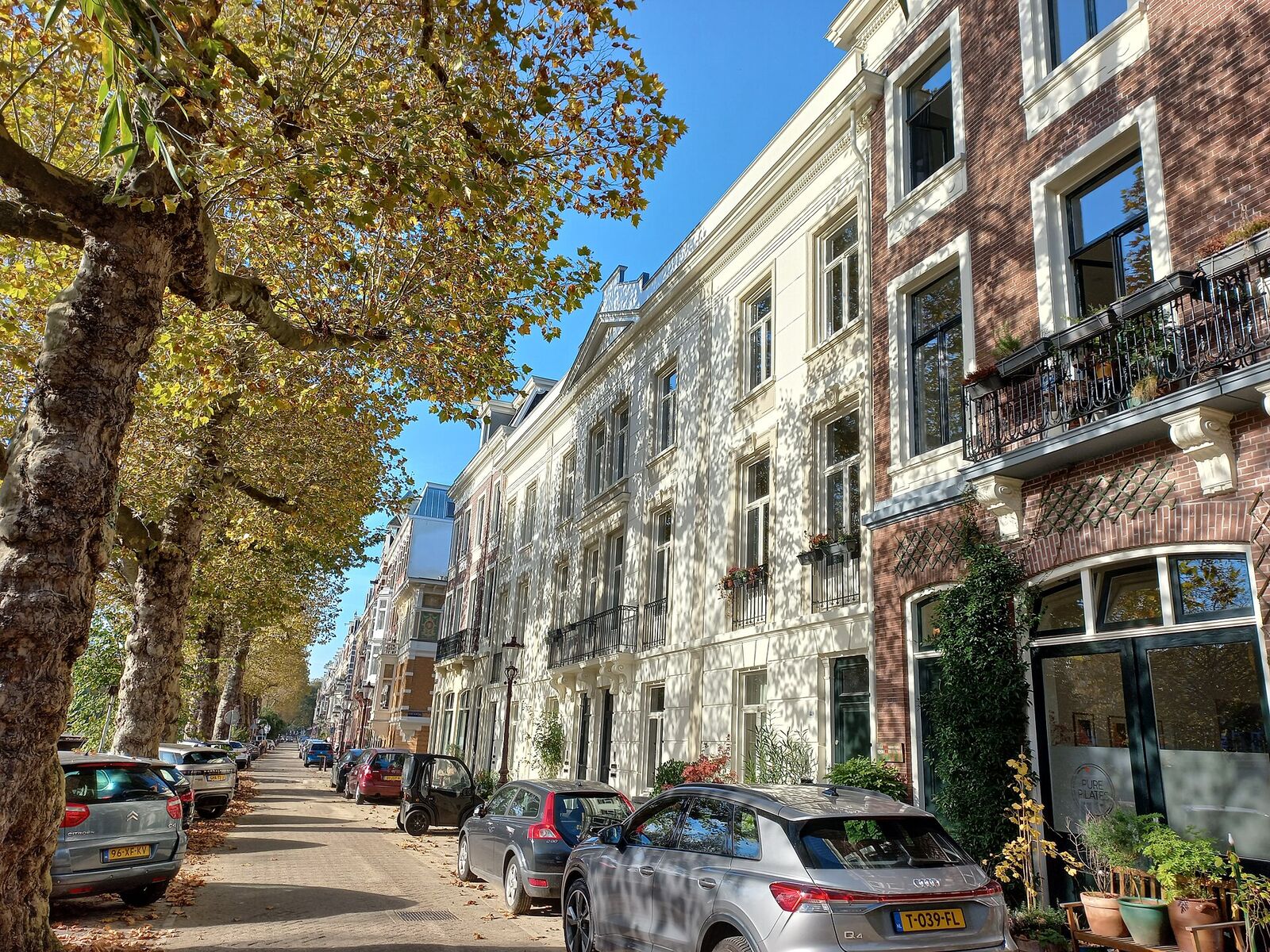
When you buy an existing Dutch home, the price is usually kosten koper (k.k., buyer pays the costs). On top of the price you pay transfer tax, the notary, the land registry, a valuation and usually a mortgage adviser, plus the NHG fee if you use the national mortgage guarantee. A Dutch mortgage can't be more than 100% of the home's value, so in practice these costs come out of your savings. Some of them, the costs of getting the mortgage, are tax-deductible in the year you pay them.
The costs at a glance
| Cost | 2026 figure where one is published | Deductible? |
|---|---|---|
| Transfer tax (overdrachtsbelasting) | 0%, 2% or 8% of the value | No |
| Notary: deed of transfer | Set by the notary (see below) | No |
| Notary: mortgage deed | Set by the notary (see below) | Yes |
| Kadaster: registering the deed of transfer | €103.50 via KIK | No |
| Kadaster: registering the mortgage deed | €103.50 via KIK | Yes |
| Valuation for the mortgage or NHG | Set by the valuer | Yes |
| Mortgage advice and arranging the mortgage | Set by the adviser | Yes |
| NHG fee | 0.4% of the loan | Yes |
| Buying agent (aankoopmakelaar) | Set by the agent | No |
| Building survey before you buy | Set by the surveyor | No, unless the lender or NHG requires it |
| Bank guarantee for the deposit | Set by the bank | No |
| Interpreter at the notary | Set by the interpreter | Not on the Belastingdienst list |
Deductibility follows the Belastingdienst's cost overview and applies only to the part of your loan that counts as eigenwoningschuld (owner-occupied home debt).
Transfer tax
In 2026 you pay 2% on a home you will live in yourself. You pay 0% if you are 18 to 34, have never used the starter exemption and the home is worth no more than €555,000. A home you won't live in yourself is taxed at 8%. On a hypothetical €450,000 home that you live in and that doesn't qualify for the exemption, that is €9,000. The notary files the return and pays it for you at the transfer. Our guide to transfer tax in 2026 covers the conditions.
A new-build is usually sold vrij op naam (v.o.n., costs included). Rijksoverheid says the buying costs are then included in the price and you pay no transfer tax.
The notary
A civil-law notary (notaris) draws up and signs two deeds with you:
- the deed of transfer (akte van levering), which makes you the legal owner
- the mortgage deed (hypotheekakte), which gives your lender its security on the home
Notaries set their own prices, so it pays to ask for a written quote that shows what the buyer pays and what the seller pays. The KNB, the professional body for notaries, puts the cost of the two deeds together at around €1,300 including VAT and stresses that prices differ from office to office. Check whether a quote includes the Kadaster fees and any surcharge for late documents. The KNB warns that banks usually send the mortgage documents late, sometimes only a few days before the signing.
The Kadaster (land registry)
The notary registers both deeds with the Kadaster and passes the fee on to you. The Kadaster's 2026 rates for a deed that transfers ownership of whole parcels, and for a mortgage deed, are the same:
| Way the deed is submitted | Deed of transfer | Mortgage deed |
|---|---|---|
| Electronically, through KIK (the Kadaster's chain-integration system) | €103.50 | €103.50 |
| Electronically, outside KIK | €181 | €181 |
| On paper | €215 | €215 |
The Kadaster kept these registration fees unchanged for 2026.
Valuation, adviser and NHG
Valuation. You need a valuation report (taxatierapport) for the mortgage. The valuer sets the market value, and that value caps how much you can borrow. Ask the valuer for a quote before you book. For an NHG loan the valuer must be independent of the sale, and the report can be no more than six months old.
Mortgage adviser. Advisers charge for advice and for arranging the mortgage. Ask what the fee will be before you start. The costs of advice and arranging linked to the mortgage are deductible. Advice and brokerage costs for the purchase of the home itself, such as a buying agent, are not.
NHG. If you use the national mortgage guarantee, the one-off fee in 2026 is 0.4% of the loan: €1,600 on a hypothetical €400,000. See NHG for expats for whether you qualify.
The deposit: 10% or a bank guarantee
The purchase contract usually requires you to pay a deposit (waarborgsom) or provide a bank guarantee (bankgarantie) of 10% of the price. You transfer it to the notary, usually within a few weeks of signing (the contract sets the deadline), and the notary holds it until the transfer. It is part of the price, so it is deducted from what you still owe on the day. If you pull out because of a condition in the contract, such as not getting financing in time, or during the cooling-off period, you get it back or the guarantee ends. If you fail to complete without a valid reason, the seller can usually claim a penalty of that same 10%.
As a buyer you have a cooling-off period (bedenktijd) of three full days, including at least two working days, from the day you receive a copy of the signed contract.
A bank guarantee means you don't need to have 10% in cash, but the bank charges for it, and the Belastingdienst lists that cost as not deductible.
Everything else you pay yourself is due before you sign the deed of transfer. The notary sets it out in a statement of account (nota van afrekening), and will ask where your savings came from.
An interpreter at the notary
If the deeds are in Dutch and you don't understand Dutch well enough, the law (article 42 of the Notaries Act) requires an interpreter at the signing. The interpreter also signs the deed. A friend or relative who speaks Dutch does not meet this requirement. The KNB recommends sworn interpreters. You pay for the interpreter and any translation, and the notary has to tell you the costs in advance. A deed can be drawn up in two languages, or in English, but only if the notary knows that language and the parties ask for it. Ask your notary early what they offer.
What you can finance
Under the national lending rules for 2026, a mortgage can be at most 100% of the home's value. That leaves no room for transfer tax, the notary or the other costs above. The main exception is energy-saving measures: you can borrow up to 106% of the value if the extra pays for measures such as insulation or a heat pump. See the energy label and your mortgage.
The limit is based on the value the valuer sets, not the price. If the valuation comes in below the price, you pay the difference from your own money as well. An adviser can tell you how much room there is in your case.
Tax deduction in the year you buy
The Belastingdienst lets you deduct these costs in one go, in your income tax return for the year you paid them:
- the notary's fee for the mortgage deed and the Kadaster fee for registering it
- the valuation, if it was needed for the mortgage or NHG
- advice and arranging costs linked to the mortgage
- the NHG fee
- a building survey required for the mortgage or NHG
- bereidstellingsprovisie (a fee for extending the offered rate)
Transfer tax, the deed of transfer and its registration, the buying agent and the bank guarantee are not deductible. If transfer tax, the deed of transfer or the buying agent were paid with the loan, the Belastingdienst still counts that part of the loan as owner-occupied home debt.
Where to go from here
Add up these costs before you make an offer, because they decide how much of your savings goes into the deal. The maximum mortgage calculator shows your borrowing limit, and buying a house step by step shows when each cost falls due. To get a clear picture of the costs for your purchase, request mortgage advice from an English-speaking adviser.
Sources
- Rijksoverheid: What costs do I face when buying a house?
- Rijksoverheid: How much can I borrow for my home?
- Wetten.overheid.nl: Tijdelijke regeling hypothecair krediet (version from 1 January 2026)
- Belastingdienst: Cost overview for the year you buy a home
- Belastingdienst: Which home costs can you deduct
- Belastingdienst: The transfer tax rate
- Kadaster: Business rates 2026
- Kadaster: Our rates in 2026
- KNB (Notaris.nl): Specific costs when buying and selling a house
- KNB (Notaris.nl): Brochure 'Een woning kopen'
- KNB (Notaris.nl): If the purchase does not go ahead
- KNB: Interpreters and the language of the deed, frequently asked questions
- KNB: Interpreters and the language of the deed
- NHG: NHG limit for 2026 set at €470,000
- NHG: Voorwaarden en normen 2026
Figures checked against the sources above on 23 September 2026.
.jpg)
Questions
Can I include the buying costs in my mortgage?
Generally not. Under the 2026 lending rules a mortgage can be at most 100% of the home's value as set by the valuer, so transfer tax, the notary and the other costs come from your own money. The exception is energy-saving measures, which can take the loan up to 106% of the value.
Do I need an interpreter at the notary if I speak some Dutch?
If the deeds are in Dutch and you don't understand Dutch well enough, the law requires an interpreter, and a friend or relative doesn't count. You pay for the interpreter, and the notary must tell you the cost in advance. Some notaries can draw up the deed in two languages, so ask early.
Which buying costs can I deduct from my income tax?
The costs of getting the mortgage: the mortgage deed and its Kadaster registration, the valuation for the mortgage or NHG, advice and arranging costs for the mortgage, and the NHG fee. You deduct them in one go in the return for the year you paid them. Transfer tax, the deed of transfer and the buying agent are not deductible.