Erfpacht in Amsterdam: ground lease explained for buyers
· 9 min read
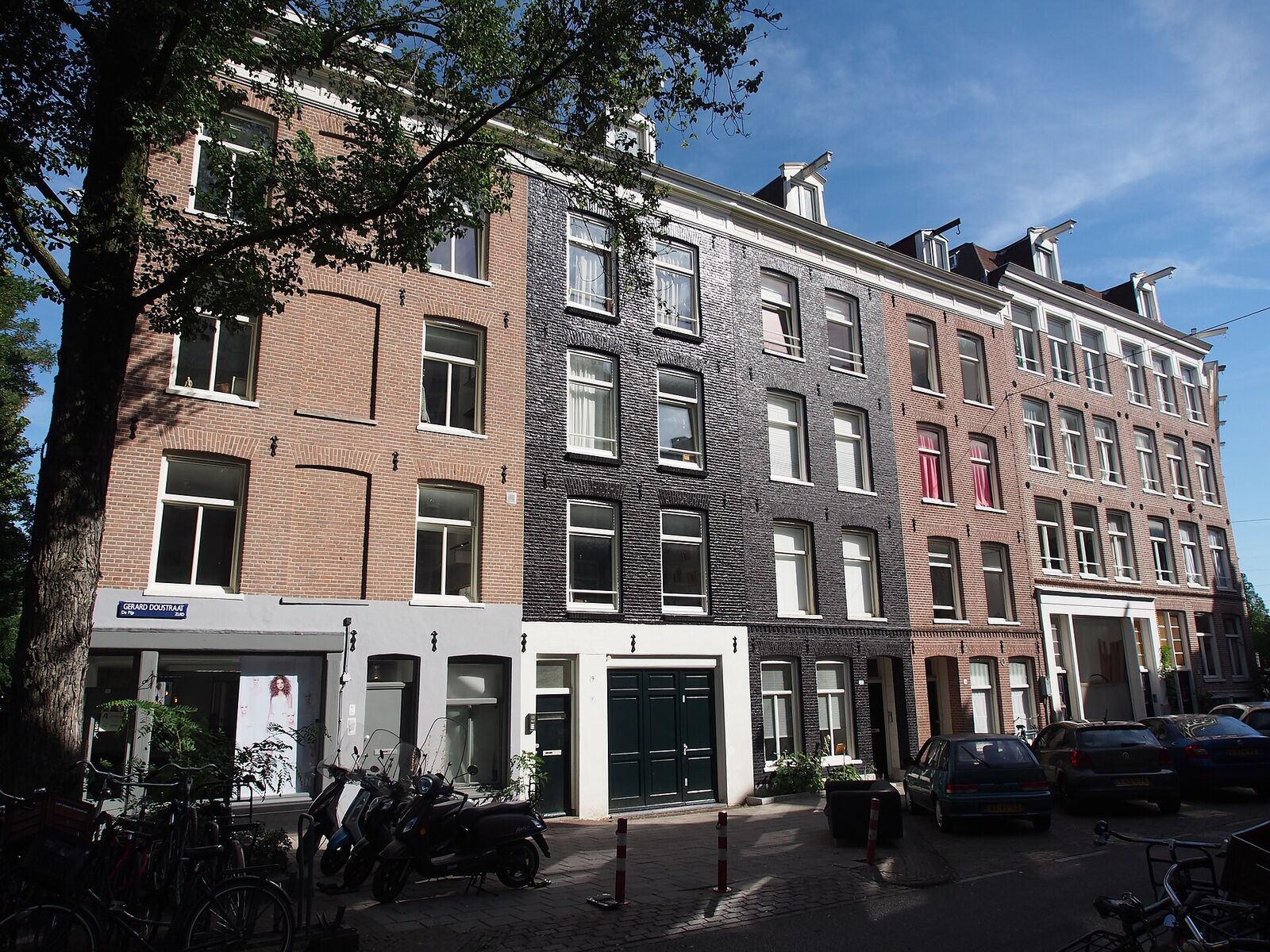
Erfpacht in Amsterdam means the municipality owns the land under your home and you hold the right to use it, for which you pay ground rent (canon) unless it has been paid in advance. Most of the city is on erfpacht, because Amsterdam has issued its land this way since 1896. What matters when you buy is which system the home is under, when the current period ends and whether the canon has been bought off, because those three things decide what the land will cost you.
How erfpacht in Amsterdam works
Erfpacht (ground lease) is the right to use someone else's land "as if you own it". In Amsterdam the landowner is almost always the municipality, and you, as the erfpachter (leaseholder), own the building and the right to the land. You can usually sell the right freely without asking the municipality, and a lender can take a mortgage on it.
For the use of the land you pay the canon. You can often pay it in advance for a set period or forever, which is called afkoop (buying off). An Amsterdam listing that says "erfpacht afgekocht tot 2045" means the canon has been paid up to 2045, not that the land is yours.
Continuous and perpetual erfpacht
Until 2016 almost everything in Amsterdam was under voortdurende erfpacht (continuous ground lease). Since 2016 the city has also had eeuwigdurende erfpacht (perpetual ground lease). The difference is what happens to the canon over time.
| Continuous (voortdurend) | Perpetual (eeuwigdurend) | |
|---|---|---|
| Duration | Indefinite, split into periods (tijdvakken), usually of 50 years | Indefinite, no periods |
| Canon | Reset at the end of each period, based on the land value at that time | Set once, then indexed for inflation every year |
| Conditions | The newest General Provisions (Algemene Bepalingen) can apply from a new period | Stay the same unless you change something |
| Buying off | Only up to the end of the current period | Possible forever |
Under continuous erfpacht you can choose how the canon is adjusted during a period: every year for inflation minus 1%, fixed for 10 years, or fixed for 25 years. If you buy a home in the middle of a period, you cannot change the payment method until that period ends.
A few rights are temporary, mainly the medieval vicarie rights, which end in 2053 and 2064 and carry no canon. They can be converted to perpetual erfpacht by emailing the municipality.
The end of a period
This is the moment that can change your costs. A few years before a continuous period ends, the municipality writes to you. If your General Provisions are from 1966, 1994 or 2000, it then offers a new canon based on the current land value. If you disagree, you and the municipality each appoint an expert, the two choose a third, and their advice is the basis for the decision.
If you want certainty earlier, for example because you need a new mortgage, you can ask for an early review (vervroegde canonherziening). You apply between the 13th and the 5th year before the period ends. The new 50-year period then starts early, under the 2000 General Provisions and a canon based on the current land value. The municipality pays half the valuation costs, and half the notary costs up to €1,000 per deed, but only if you go through with the review and have it recorded by a notary; otherwise you pay all the costs yourself. You cannot apply for an early review and a switch to perpetual erfpacht at the same time.
Switching to perpetual erfpacht
Amsterdam's transition scheme (overstapregeling) was adopted by the city executive on 9 May 2017. The municipality states that switching is voluntary and possible at any time. You apply and get an offer through the Overstapportaal, the online portal.
The general conditions are:
- you have a home under continuous erfpacht
- you have no arrears on the canon
- the right does not include commercial space such as a shop or office
You do not need permission from the owners' association (VvE) to switch an apartment; you make your own agreement with the municipality and sign it at the notary. Business and community property cannot switch.
For the perpetual canon, the municipality takes the WOZ value of the previous tax year and multiplies it by a land share for your street (the buurtstraatquote, between 5% and 49% of the WOZ value). That gives the land value, and the annual canon is a percentage of it (the canonpercentage, set every year, between 2.39% and 4.23%). The municipality has offered a discount for switching (overstapkorting) on the annual canon or the buyout sum; check the current percentage in your offer rather than relying on the formula, because the offer is what you sign.
Paying or buying off the canon
Buying off continuous erfpacht means paying all remaining instalments up to the end of the current period in one go. You can do it when the right is created or later. Homes under the 1994 General Provisions with a residential purpose can, once, extend the current period by up to 50 years and buy off the canon for that extended period.
Offers can take several months because of demand, and you then have 3 months to accept. If you buy off only the canon of a continuous period, the municipality pays 50% of the notary's costs, up to €1,000. The Rekentool Erfpacht on amsterdam.nl gives an indicative figure, but the official offer can differ.
What to check before you buy
Ask the seller's agent for the erfpacht details, and have your notary check them. In Amsterdam, the KNB (Royal Dutch Association of Civil-law Notaries) notes that the purchase contract is always drawn up by a notary.
- Which system. Continuous or perpetual, and for continuous erfpacht which General Provisions apply (for example those of 1966, 1994 or 2000).
- The end date of the current period. A period ending a few years after you buy means a new canon soon.
- Whether the canon is bought off, and until when. "Afgekocht" means nothing without an end date.
- The current annual canon and how it is adjusted: yearly, or fixed for 10 or 25 years.
- Whether the seller applied to switch. A registered application date passes to you, but you must request an offer yourself within 6 months of the transfer, or the date lapses. If the seller already signed the switch at the notary, you take over those agreements.
- The permitted use. Changing it, extending the building or adding land can raise the canon, and you pay the higher canon straight away, even in the middle of a period.
- The deed. In the Kadaster's ownership information (Eigendomsinformatie), erfpacht shows under "rechten". A copy of an erfpacht deed costs €19.85 as a PDF from the Kadaster. The deed by which the right was acquired shows the canon and the term; the deed that created the right shows the conditions, and finding that one often needs a Kadaster search that costs €60 extra.
Erfpacht, your mortgage and tax
Lenders and NHG (the national mortgage guarantee) count the canon as a housing cost. NHG's 2026 conditions say:
- the canon is added to your total financing burden when the lender runs its affordability test
- if the canon will be revised within 12 months of the binding offer and goes up, the lender uses the higher figure
- the cost of buying off the canon can be included in the NHG cost test only if it is bought off for at least the term of the loan
- you can refinance an NHG loan to buy off the canon, provided the erfpacht right continues for the term of the loan
On the tax side, the annual canon for your own home is deductible, at the same maximum of 37.56% that applies to mortgage interest in 2026. A loan you take out to buy off the ground lease counts as debt for your own home, so its interest is deductible under the normal conditions.
Other cities with erfpacht
Amsterdam is the best-known case, but not the only one. The municipality itself notes that several other large cities also use erfpacht. A 2022 study for the Ministry of the Interior analysed the general erfpacht terms of 24 municipalities, including Rotterdam, The Hague, Utrecht and Leiden, and found that the terms and how the canon is calculated differ widely. Outside Amsterdam, read that municipality's own General Provisions; nothing above transfers automatically.
Where to go from here
Our guide to buying a house step by step shows where the erfpacht checks fit, and mortgage interest deduction explains how the canon is treated in your tax return. The costs of buying calculator adds up the one-off costs, and buying a house in Amsterdam covers the city's other local rules and prices. If the home has a period ending soon or a canon you are not sure about, you can request mortgage advice and ask an adviser how a lender will count it.
Sources
- Gemeente Amsterdam: Erfpacht
- Gemeente Amsterdam: Wat is erfpacht
- Gemeente Amsterdam: Voortdurende erfpacht betalen
- Gemeente Amsterdam: Overstappen naar eeuwigdurende erfpacht
- Gemeente Amsterdam: Voorwaarden overstappen naar eeuwigdurend erfpacht
- Gemeente Amsterdam: Overstap en een woning (ver)kopen
- Gemeente Amsterdam: Overstapregeling collegebesluit 9 mei 2017
- Kadaster: Hoe ziet u of er erfpacht rust op uw perceel?
- Kadaster: Akte erfpacht opvragen
- NHG: Voorwaarden en normen 2026
- KNB / notaris.nl: Een woning kopen (brochure)
- Belastingdienst: Mag ik mijn hypotheekrente altijd aftrekken?
- Belastingdienst: Minder aftrek voor uw eigen woning als u een hoog inkomen hebt
- Rijksoverheid: Rapportage onderzoek algemene erfpachtbepalingen (2022)
Figures checked against the sources above on 1 October 2026.

Questions
Is it a bad idea to buy a house with erfpacht in Amsterdam?
Not in itself, since most of the city is on erfpacht. What matters is the cost: whether the canon is bought off and until when, whether the home is under continuous or perpetual erfpacht, and when the current period ends. A period ending soon can mean a new, higher canon based on today's land value.
What does 'erfpacht afgekocht' mean?
It means the ground rent has been paid in advance, for the rest of a period or, under perpetual erfpacht, forever. The land still belongs to the municipality. Always check the end date: under continuous erfpacht, buying off only runs to the end of the current period.
Can I still switch to perpetual erfpacht in Amsterdam?
Yes. The municipality states that switching from continuous to perpetual erfpacht is voluntary and possible at any time for homes without arrears or commercial space. You request an offer through the Overstapportaal; if you buy a home where the seller registered an application date, you must request your own offer within 6 months of the transfer.